

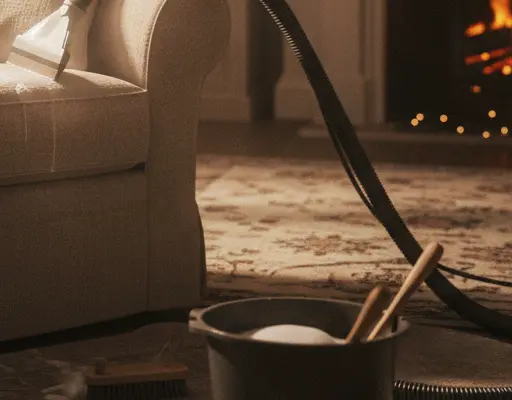
Cleaning your sofa in summer: why now?
Because the summer months bring unique challenges, cleaning your sofa regularly is essential.
- Perspiration and sunscreen penetrate deeper into the fabric than in cooler seasons.
- Sand grains from beach trips invisibly scour the fibres, which speeds up wear.
- Pollen and moisture create a warm greenhouse for bacteria and mould that cause odours.
- Anyone with asthma or hay fever notices more symptoms because allergens build up.
But there is good news: the heat drastically shortens the drying time. That means you can clean more thoroughly without sitting on a damp sofa for days. Regular cleaning also extends the life of your couch, because dirt does not settle permanently into the fibres.
Methods & products: steam cleaner versus upholstery cleaner
Steam cleaner: a deep-cleaning powerhouse
A steam cleaner turns hot water into a fine steam that penetrates deep into textile fibres. As a result, it:
- Loosens stubborn dirt, even old crumbs and dried drink stains.
- Kills bacteria, dust mites and mould spores (see here for tips on mould removal) without aggressive chemicals.
- Leaves less residue behind, which keeps the fabric airier.
Still, there are a few points to watch. Use a medium temperature so the textile does not shrink. Keep the nozzle moving to avoid wet patches and dripping. Delicate fabrics such as silk or linen call for extra care, so always test on a hidden section first.
Upholstery cleaner (liquid or foam)
An upholstery cleaner is a specially formulated cleaning product for soft furnishing fabrics. The advantages:
- Effective on local stains (coffee, red wine, ice cream).
- Available in versions for cotton, microfibre, alcantara or wool.
- Contains foam or micro-enzymes that encapsulate dirt, so you use less moisture.
Because every product is different, it is best to avoid overdosing: this can cause discolouration or leave a sticky residue. Test on an inconspicuous area first and follow the instructions on the label to the letter. This is also useful if you are looking for mild, alternative cleaning products.
A practical comparison for the summer
- Steam cleaner – ideal for thorough deep cleaning, large surfaces and killing bacteria.
- Upholstery cleaner – ideal for a quick refresh, spot stain treatment and delicate fabrics.
- Cost – buying a steam cleaner is more expensive, but the appliance also works on carpets, mattresses and curtains. A bottle of upholstery cleaner is cheaper per use, yet the total price can add up if you have to repeat it often.
That way you make a well-founded choice based on the level of soiling, the type of fabric and your budget.
Preparing to clean your sofa: summer-ready tips
Good preparation saves time and prevents damage, so follow these steps:
- Ventilate the room – Thanks to the summer breeze, moisture evaporates faster. Open windows and doors opposite each other for cross-ventilation.
- Vacuum thoroughly – First remove sand, hair, pollen and crumbs (for more information on vacuum cleaner maintenance). Otherwise dirt mixes with the cleaning product and forms muddy patches. Use the upholstery nozzle and go between the cushions as well.
- Check the type of textile –
- Fabric and microfibre usually tolerate moderate heat and mild cleaning products.
- Leather or faux leather needs specific conditioners; avoid steam.
- Wool or silk requires lukewarm steam from a distance, or dry foam formulas.
Read the care label under the cushions for the safest approach.
- Safety test – Test every product or steam setting on an inconspicuous spot. Wait ten minutes and check for discolouration or shrinkage. In summer especially, sunlight can speed up colour change, so it is best to work in the shade.
Cleaning your sofa yourself: a step-by-step guide
Step 1: Treating individual stains with upholstery cleaner
- Shake the bottle or can well so the active ingredients mix.
- Spray or apply foam onto the stain, but no wider than necessary.
- Let the product work in as directed on the packaging (usually 1-5 minutes).
- Blot with a white microfibre cloth from the outside inwards. That way you prevent rings.
- Repeat if necessary, but each time wait until the fabric is almost dry.
Step 2: Deep cleaning with a steam cleaner
Because you now only have local stains left, you can steam the entire sofa:
- Fill the reservoir with tap water; only add a scent-neutral additive if the manufacturer allows it.
- Set the temperature to medium (around 100 °C) so the steam stays dry enough.
- Work in overlapping passes, from top to bottom, keeping the nozzle at a constant distance.
- Take short breaks in between so the textile does not become saturated.
Drying advice: open the windows, use a fan and avoid direct midday sun. Sun that is too intense can cause water rings or discolouration. After roughly one to three hours the upholstery will feel dry again.
Step 3: Aftercare for freshness
- Sprinkle a thin layer of baking soda on spots that are still slightly damp. The powder absorbs odours as it dries.
- Leave it to work for at least 30 minutes and then vacuum the powder up gently.
- Optionally, you can put two drops of lavender or lemon oil on the vacuum hose for a subtle scent. Do not overdo it, though, to avoid oil rings.
Handy summer tips:
- Place the sofa in a shaded spot outside if you can; that way you benefit from the warm air but not from direct UV radiation.
- Point a fan or a dehumidifier at the wet areas for lightning-fast drying.
- For extra tips on maintaining your cleaning equipment optimally, including preventing unpleasant odours, take a look at this link.
When should you call in a professional upholstery cleaner?
Although cleaning your sofa yourself often works well, there are situations in which it is better to call an expert:
- Stubborn, old stains that have soaked through into the lining.
- Very large corner sofas or settees with lots of decorative buttons and folds.
- A lack of time in a busy summer schedule.
- Family members with severe allergies who benefit from a certified anti-allergy treatment.
Professionals have powerful truck-mounted steam extractors, specialised stain removers and often a satisfaction guarantee. They also treat the fabric with protective layers that repel stains in the long term. The downsides can be waiting times and a higher cost, certainly in peak season.
Checklist before you decide:
- How serious is the stain or odour?
- What material is your couch made of?
- Is your budget sufficient for professional help?
- Is there time to clean it yourself and let it dry?
If you have doubts about any of these points, requesting a quote can bring clarity.
Extra tips for a lastingly fresh sofa in summer
- Air it regularly. Pull the cushions apart and let the summer breeze flow freely through the fibres.
- Protect it from sunlight. UV rays break down pigments and cause discolouration. A light curtain filters the harshest sunlight without darkening the room.
- Quick-clean hacks:
- Ice cubes for chewing gum. First harden the sticky mess, then carefully scrape it away with a plastic card.
- White wine on red wine stains. Blot immediately; the lighter wine dilutes the pigments so they disappear more easily.
By building these small tricks into your summer routine, your sofa stays like new for longer.
Frequently asked questions about sofa cleaning, steam cleaners & upholstery cleaners
How long does a steam-cleaned sofa take to dry?
Depending on fabric thickness, temperature and ventilation, the drying time varies from one to six hours. Better ventilation and a fan shorten the wait.
Can every steam cleaner be used on upholstery fabric?
Not every machine is suitable. Check the temperature and pressure settings: steam that is too hot or too wet can cause shrinkage or water rings.
What should you do when discolouration starts to appear?
Stop cleaning immediately, blot the spot dry and consult a professional. Above all, do not keep scrubbing; that only makes the difference in colour worse.
Are there eco-friendly upholstery cleaners?
Yes, there are plant-based foam formulas and DIY mixtures based on natural soaps and vinegar that have less impact on the environment. Always use a test area, though.
Conclusion – cleaning your sofa successfully this summer
In summary, cleaning your sofa yourself in summer offers plenty of advantages: faster drying times, a fresh living environment and cost savings. Even so, a professional upholstery cleaner is useful for complex stains, allergies or time pressure. With the practical tips and the steam cleaner and upholstery cleaner guidelines in this article, you can now get started with confidence. Choose the right product, prepare carefully, and then enjoy a clean, odour-free sofa without a worry.
Still have doubts, or would you like advice on pricing and planning? Then click on “Contact us for more information” above and compare the options with no obligation. Also discover our other blog posts on general furniture care, the stain ABC and seasonal cleaning tips. That way your interior stays radiantly fresh all year round.
